
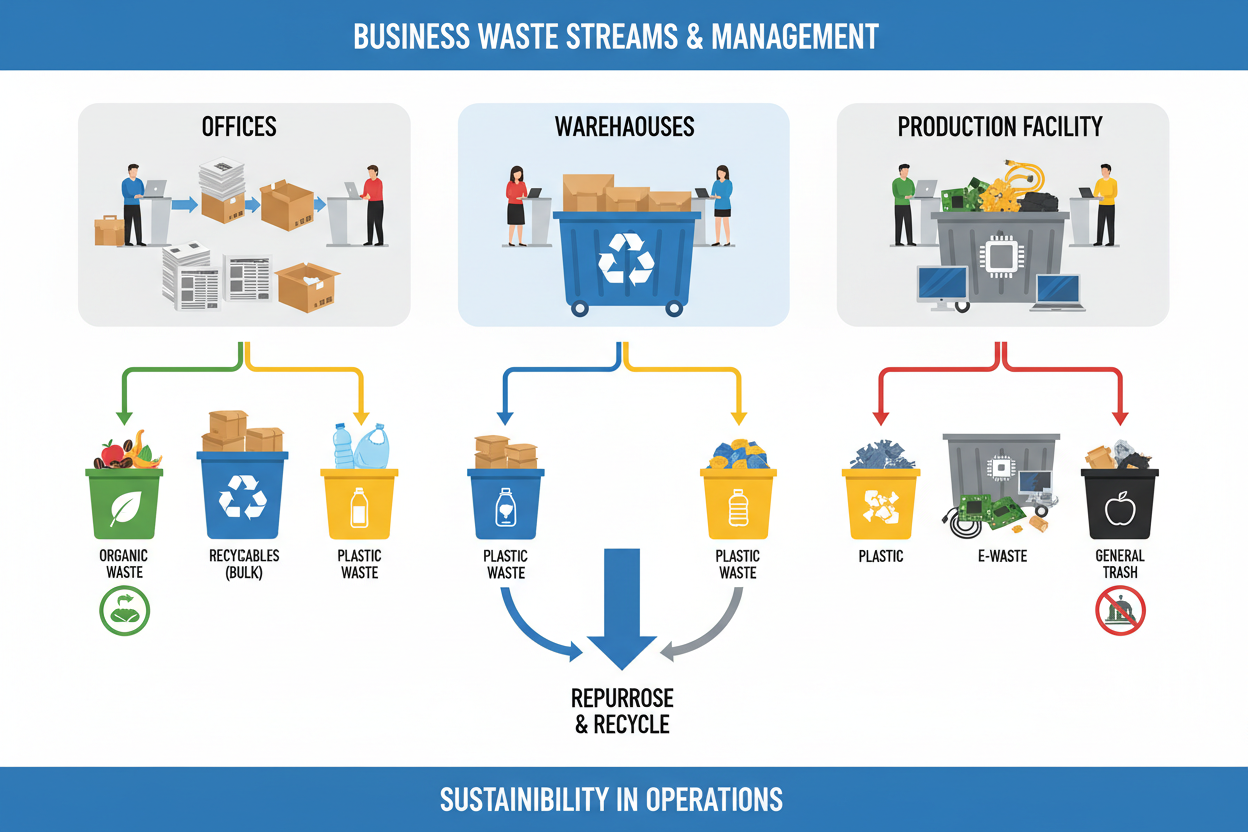
Every business creates waste. It's unavoidable. But here's the thing most business owners don't realize: the journey that waste takes from your office trash can to its final destination is more complex than you think. Understanding this journey, which we call a waste stream, can save you serious money while helping the environment.
If you're running a warehouse, managing a school facility, or operating any kind of commercial space, knowing your waste streams isn't just about being eco-friendly. It's about running a smarter operation.
What Are Waste Streams in Business?
A waste stream is the complete flow of waste materials from the moment they're created to their final destination. Think of it like a river, except instead of water flowing downstream, it's your business's discarded materials moving through collection, sorting, and disposal or recycling.
The destination for waste can be recovery facilities, recycling centers, or final disposal sites. But the path it takes depends entirely on how well you manage it at the source.
Most businesses participate in what's called the commercial and industrial (C&I) waste stream. This stream includes waste from all types of businesses, from schools to retail stores to office buildings. Since so many different operations feed into this stream, the types of waste vary dramatically.
The Main Types of Waste Streams Your Business Creates
Understanding what waste your business generates is the first step toward managing it better. Here are the primary waste streams you're likely dealing with:
Municipal Solid Waste (MSW)
This is your everyday trash. Paper from the printer, packaging materials, food scraps from the break room, and general refuse. MSW is typically heterogeneous, containing a mix of biodegradable and non-biodegradable materials. The problem? When everything gets mixed together, valuable recyclable materials end up in landfills.
Recyclable Materials
Paper, cardboard, plastics, metals, and glass all fall into this category. These materials have value and can be processed into new products. But here's where most businesses go wrong: contamination. When recyclables get mixed with food waste or non-recyclable materials, entire batches can become worthless.
Organic Waste
If your business has a cafeteria, kitchen, or produces food-related waste, organic materials make up a significant portion of your waste stream. Food scraps and yard trimmings can be composted and used as fertilizer through industrial-scale composting or anaerobic digestion.
Construction and Demolition Waste
If you're doing any renovation work, you're generating wood, drywall, concrete, and metals. The construction industry must separate reusable materials from construction and demolition waste, with specific streams subject to strict safety requirements.
Liquid Waste
Often overlooked but critically important. This includes wastewater from sinks, cleaning operations, and industrial processes. Liquid waste requires special treatment before disposal to prevent water contamination.
Why Understanding Your Waste Streams Matters
Most business owners see waste management as a necessary expense. But smart operators know it's an opportunity.
Cost Savings That Add Up
Landfilling waste can cost $28 per ton or more, and that doesn't include collection fees, equipment costs, or regulatory compliance expenses. When you properly separate recyclables from trash, you can dramatically reduce disposal costs. Some recyclable materials can even generate revenue.
One study found that Texas Instruments saved $215,000 annually after a waste audit revealed 40% of their factory waste was recyclable. That's real money going straight to the bottom line.
Environmental Impact
Beyond the financial benefits, proper waste stream management reduces pollution and conserves natural resources. Food waste in landfills produces methane, a powerful greenhouse gas. By diverting organic waste to composting, you're making a measurable environmental difference.
Regulatory Compliance
Waste regulations are getting stricter, not looser. As of March 2025, all workplaces in England have a legal duty to separate dry recyclable materials including plastic, metal, glass, paper and card. While regulations vary by region, the trend is clear: businesses must take waste segregation seriously.
How to Identify Your Business's Waste Streams
You can't manage what you don't measure. Here's how to get started:
Conduct a Waste Audit
A waste audit helps determine what types of garbage and volumes your company creates. Walk through your facility and identify where waste is generated. Check trash bins in different departments. You'll probably be surprised by what you find.
Set aside a representative week and actually sort through your waste. Yes, it's messy. But the insights are worth it. Weigh different categories and calculate percentages. You might discover that 60% of what you're throwing away could be recycled or composted.
Map Your Current Process
Track where waste goes from generation to final disposal. Who collects it? How often? Where does it end up? Understanding your current system helps identify inefficiencies and opportunities.
Identify High-Volume Waste Sources
Some areas of your business generate more waste than others. Focus your efforts where they'll have the biggest impact. A restaurant's kitchen will have different waste challenges than an office's printer room.
Implementing Effective Waste Segregation
Once you know what waste you're creating, it's time to manage it better. Proper waste segregation is the foundation of any successful waste management program.
Set Up the Right Infrastructure
Using color-coded bins for different types of waste helps ensure proper segregation. Blue for recyclables, green for organics, black for landfill-bound trash. This simple visual system makes it easier for everyone to sort correctly.
Companies like Sunasha Distribution offer Nova recycling and compost bins specifically designed for commercial and institutional settings. These aren't your residential bins. They're durable, clearly labeled, and built for high-traffic environments like schools, offices, and warehouses.
Train Your Team
The best waste infrastructure in the world won't help if people don't use it correctly. Run simple training sessions about what waste materials must be separated, which bins they go in, and where they're located.
Make it easy. Put clear signage on bins showing exactly what belongs in each one. Include pictures if needed. The fewer questions people have, the better they'll follow the system.
Start at the Source
Effective recycling requires proper waste segregation at the source. Don't rely on sorting later. When materials get mixed, contamination becomes a huge problem. One greasy pizza box can ruin an entire bin of recyclable paper.
Common Waste Stream Challenges and Solutions
Every business faces obstacles when implementing better waste management. Here's how to overcome them:
Limited Space
Not every facility has room for multiple bins in every location. If you have limited space or only produce small volumes, use a single stream recycling container to combine materials. While not ideal, it's better than mixing recyclables with trash.
Employee Resistance
People resist change. Some employees won't want to spend extra time sorting waste. Combat this by explaining the benefits clearly. Show them cost savings. Make it part of company culture, not just another rule.
Contamination Issues
Contamination may mean an entire load goes to landfill rather than recycling. This wastes effort and money. Address contamination through better signage, training, and spot checks. Consider appointing waste champions in different departments to monitor compliance.
Sector-Specific Waste Stream Considerations
Different industries face unique waste challenges:
Logistics and Warehousing
Cardboard and plastics are major waste streams within the mobility and logistics sectors due to buying and selling of parts. If you're in this industry, focus your recycling efforts on packaging materials.
Food Industry
Organic waste like fruit and vegetable residues, powders, and other food products create diverse waste streams. Composting programs can transform this from a disposal problem into a resource.
Office Buildings
Paper and cardboard dominate office waste streams. Implementing paper reduction strategies and ensuring proper recycling can significantly cut disposal costs.
Measuring Success and Continuous Improvement
Set specific, measurable goals for your waste management program:
- Reduce landfill-bound waste by a specific percentage
- Increase recycling rates to a target level
- Cut waste disposal costs by a certain amount
- Achieve zero waste to landfill status
Track your progress monthly. Review your waste hauling bills. Monitor contamination rates in your recycling. Adjust your approach based on what the data tells you.
Dell Technologies in Round Rock, Texas reduced landfill waste by 78% through detailed waste audits, saving $340,000 each year. These results didn't happen overnight. They came from consistent effort and continuous improvement.
The Role of Proper Equipment in Waste Stream Management
Having the right tools makes all the difference. Quality recycling and compost bins designed for commercial use stand up to daily wear while keeping materials properly separated.
Sunasha Distribution provides Nova recycling bins built specifically for the demands of schools, institutions, offices, and commercial facilities. These aren't flimsy residential bins that crack under heavy use. They're professional-grade solutions that support effective waste segregation programs.
From small under-desk recycling bins for offices to large curbside bins for facilities, having purpose-built equipment ensures your waste management system actually works in practice, not just on paper.
Moving Forward with Better Waste Management
Understanding waste streams in businesses isn't complicated, but it does require attention and commitment. Start small. Pick one waste stream to focus on first. Maybe it's paper recycling in your office or organic waste from your cafeteria.
Implement a system. Track results. Adjust as needed. Then expand to other waste streams.
The businesses that succeed in waste management share one thing: they treat it as an ongoing process, not a one-time project. Waste generation changes as your business evolves. Your management approach should evolve with it.
By understanding your waste streams, implementing proper segregation, and using the right equipment, you're not just checking a compliance box. You're reducing costs, helping the environment, and running a more efficient operation.
That's not just good for the planet. It's good business.
Frequently Asked Questions
What is the difference between a waste stream and waste management?
A waste stream refers to the complete flow of waste from creation to final disposal, while waste management is the process of controlling and handling that flow. Think of waste streams as the path materials take, and waste management as your system for directing where they go. Effective waste management requires understanding all your business's waste streams first.
How do I know which waste streams my business has?
Conduct a waste audit by examining trash from different areas of your operation over a representative period. Sort materials into categories like paper, plastic, organic waste, and general trash. Weigh each category to determine percentages. This hands-on assessment reveals exactly what waste streams you're generating and their relative volumes.
Can small businesses benefit from waste stream management?
Absolutely. Small businesses often see the biggest proportional savings because they're starting from scratch with waste management. Even simple changes like separating recyclables from trash can cut disposal costs by 30-50%. You don't need a massive operation to benefit from better waste handling practices and proper segregation systems.
What are the most common mistakes businesses make with waste segregation?
The biggest mistake is mixing waste types because of poor bin placement or unclear labeling. Other common errors include insufficient employee training, using the wrong size or type of containers, and not monitoring contamination rates. Many businesses also fail to conduct regular waste audits, missing opportunities to improve their systems over time.
How often should we review our waste management practices?
Review your waste management program quarterly at minimum. Check contamination rates, disposal costs, and recycling volumes monthly. Conduct a comprehensive waste audit annually to identify new opportunities or changing patterns. As your business evolves, your waste streams will change too, so regular reviews keep your management practices aligned with current operations.