
How Rodent Bait Stations Work: A Complete Guide to Effective Rodent Control
Rodent infestations create serious problems for homes and businesses. Mice and rats spread diseases, contaminate food, damage property, and reproduce rapidly. One mouse can produce up to 72 offspring in a single breeding season, turning a small problem into a major infestation within weeks.
Rodent bait stations offer an effective, safe solution for controlling these pests. Understanding how these devices work helps you make informed decisions about rodent control for your property.
What Are Rodent Bait Stations?
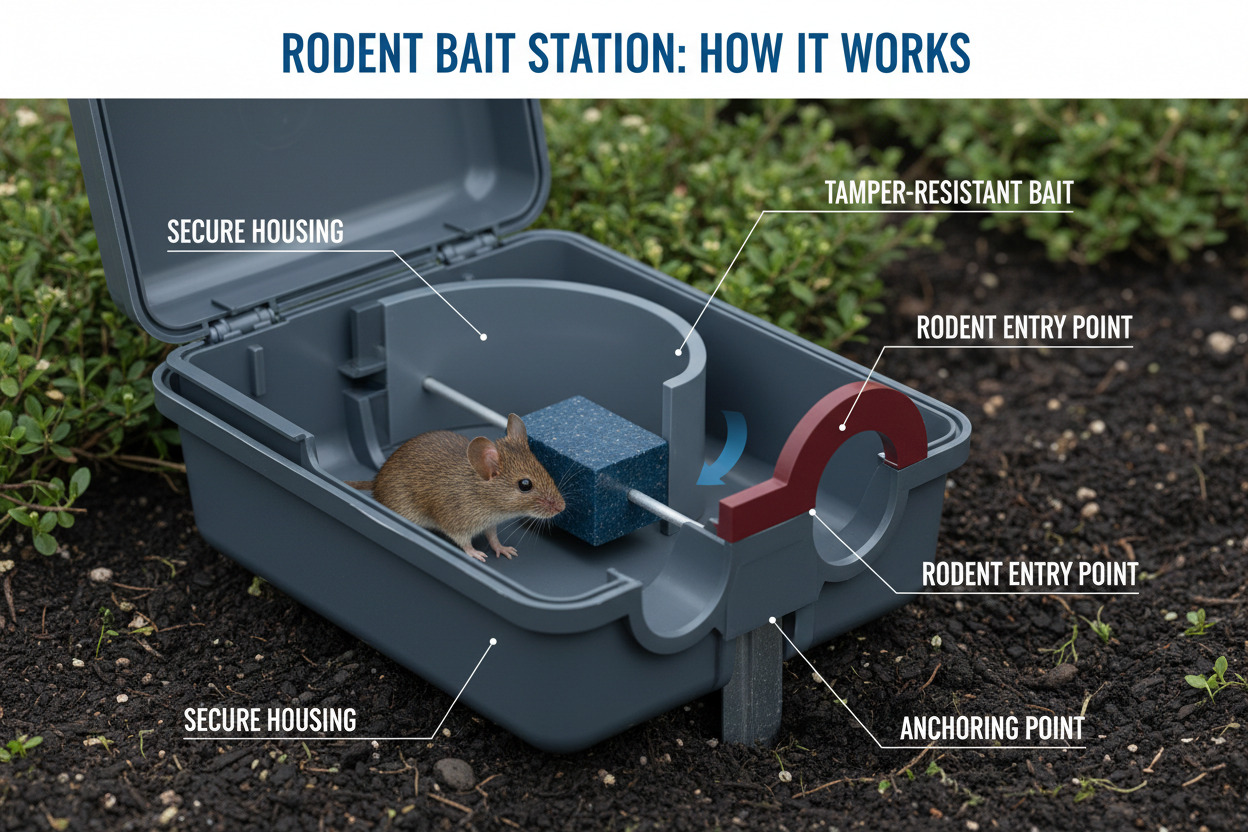
Rodent bait stations are secure, enclosed containers designed to hold poisoned bait while keeping children, pets, and non-target animals safe. These tamper-resistant boxes typically measure 4 to 5 inches in length and feature small entry holes that allow mice and rats to enter while preventing larger animals from accessing the toxic bait inside.
The stations protect the bait from weather, moisture, and dust, keeping it fresh and appealing to rodents. Most designs include a locking mechanism that requires a special key to open, adding an extra layer of safety for households and businesses.
How Do Rodent Bait Stations Work?
The mechanism behind rodent bait stations is straightforward but effective. Here's the step-by-step process:
Attraction: Rodents detect the scent of the bait inside the station. The bait is formulated to smell and taste like food that appeals to their natural feeding habits.
Entry: The rodent enters through the small opening, which is sized specifically to accommodate mice or rats while excluding larger animals. Most stations feature ramp-style entrances designed for easy rodent access.
Consumption: Inside the station, the rodent feeds on the bait block, which is securely mounted to prevent spillage. The rodent doesn't need to consume large amounts for the poison to be effective.
Exit: Unlike traps, bait stations don't capture or kill rodents inside. The rodent leaves the station after feeding and typically returns to its nest.
Elimination: The active ingredients in the bait take effect over 24 to 48 hours. Most modern rodenticides use anticoagulant formulas that prevent blood clotting, leading to internal bleeding. The rodent dies in its nest, away from the bait station.
One bait station can eliminate multiple rodents. A single one-ounce bait block can kill up to 12 mice, while a four-ounce block can eliminate up to 10 rats.
Key Components of Effective Bait Stations
Quality rodent bait stations share several important features:
Tamper-Resistant Design: The EPA requires commercially manufactured bait stations to meet eight strict criteria for tamper resistance. They must be strong enough to withstand forced entry attempts by children and dogs, feature lockable mechanisms, and use entry holes sized to exclude larger animals.
Weather Protection: Durable stations withstand rain, sun, and temperature extremes while protecting the bait inside. This feature allows year-round placement both indoors and outdoors.
Secure Bait Mounting: Internal rods or clips hold the bait block firmly in place, preventing rodents from dragging it elsewhere and reducing contamination risk.
Transparent Monitoring: Many stations include clear tops or inspection windows, making it easy to check bait levels without opening the unit.
Multiple Entry Points: Better designs feature at least two openings on opposite sides. This allows rodents to see an escape route before entering, making them more comfortable accessing the station.
Types of Rodent Bait Stations
Different situations require different station designs:
Mouse Bait Stations: Designed with smaller entry holes (1 to 1.5 inches in diameter) specifically for house mice. These compact stations fit in tight spaces like behind appliances or along baseboards.
Rat Bait Stations: Feature larger openings (approximately 2.5 inches in diameter) to accommodate Norway rats and roof rats. These stations are more substantial and hold larger bait blocks.
Refillable Stations: Built for long-term use with replaceable bait blocks. These cost-effective options work well for ongoing rodent control programs.
Disposable Stations: Come pre-filled with bait and are discarded once the bait is consumed. These offer convenience and eliminate the need to handle toxic materials directly.
Strategic Placement for Maximum Effectiveness
Proper placement dramatically impacts the success of your rodent control efforts. Rodents are creatures of habit that follow the same routes repeatedly when traveling between their nests and food sources.
Indoor Placement:
- Along walls and in corners where you notice grease marks, droppings, or gnaw marks
- Behind and under kitchen appliances
- In basements, garages, and attics
- Near entry points where rodents access the building
Outdoor Placement:
- Around the perimeter of buildings
- Near doors, windows, and garage entrances
- Around utility service entrances and ventilation systems
- Along foundations where rodents travel
- Near trash bins, compost areas, and woodpiles
Always position bait stations with entrances facing walls or backdrops, as rodents prefer traveling along edges rather than crossing open spaces.
Proper Spacing Matters: Place rat bait stations 15 to 30 feet apart. For mice, reduce the distance to 8 to 12 feet. This spacing ensures comprehensive coverage without wasting resources.
Safety Features and Precautions
Modern rodent bait stations prioritize safety without compromising effectiveness:
Child and Pet Protection: The tamper-resistant design prevents accidental access to the toxic bait inside. The locking mechanisms require specific tools to open, keeping curious children and pets safe.
Environmental Responsibility: By containing the bait within a secure box, stations minimize environmental contamination and prevent non-target wildlife from consuming the poison.
Clear Labeling: All stations should display prominent warning labels such as "POISON" or "RODENT BAIT - DO NOT TOUCH" to alert people to the contents.
Despite these safety features, always place bait stations in areas with minimal foot traffic from children and pets. Never rely solely on the tamper-resistant design.
Rodent Bait Stations vs. Traps
Understanding the difference between bait stations and traps helps you choose the right rodent control method:
Bait Stations:
- Kill multiple rodents over time
- Rodents consume poison and die elsewhere
- Work continuously as long as bait remains
- Better for large infestations
- Require less frequent checking
- More effective for outdoor perimeter protection
Traps:
- Kill or capture one rodent at a time
- Require immediate disposal of dead rodents
- Provide instant results
- Better for active indoor infestations
- Need frequent monitoring and resetting
- More labor-intensive
Professional pest control companies often use both methods together, placing traps indoors for quick knockdown of existing populations while using bait stations outdoors to prevent new rodents from entering.
Maintenance and Monitoring Best Practices
Regular maintenance ensures bait stations remain effective:
Weekly Inspections: Check stations at least once per week during active infestations. Look for signs of rodent activity such as disturbed bait, droppings near the station, or gnaw marks on the entrance.
Bait Replacement: Replenish consumed bait promptly. Even if some bait remains, rodents may have consumed enough poison to be effective. Fresh bait maintains attractiveness to new rodents.
Station Cleaning: Remove debris, dead insects, and contamination from stations periodically. Clean stations remain more attractive to rodents.
Position Adjustments: If a station shows no activity after two weeks, relocate it to a different area. Rodents may be traveling different routes.
Record Keeping: Document inspection dates, bait consumption rates, and rodent activity signs. This data helps you understand the infestation severity and track progress over time.
Why Professional-Grade Stations Matter
Choosing quality rodent bait stations makes a significant difference in results. Professional-grade stations offer several advantages over consumer-grade alternatives:
Superior Durability: Commercial stations withstand years of use in harsh conditions without cracking, warping, or losing effectiveness.
Better Security: High-quality locking mechanisms provide genuine tamper resistance rather than simple childproof latches that determined pets or children might breach.
Optimal Design: Professional stations feature thoughtfully designed entry points, bait mounting systems, and drainage that maximize rodent acceptance and minimize maintenance.
Regulatory Compliance: Top-tier stations meet all EPA requirements for commercial pest control use.
Rodent Bait Station Suppliers: What to Look For
When sourcing rodent bait stations for commercial or professional use, partner with reliable rodent bait station suppliers who understand the industry. Quality suppliers offer several key benefits:
Product Selection: Access to multiple station types, sizes, and configurations for different rodent species and environments.
Expert Guidance: Knowledgeable support staff who can recommend appropriate products for specific applications.
Bulk Pricing: Competitive wholesale pricing for pest control professionals, facility managers, and institutional buyers.
Consistent Supply: Reliable inventory and fast shipping to keep your rodent control program running smoothly.
Quality Assurance: Products from established manufacturers with proven effectiveness and safety records.
Sunasha Distribution: Your Trusted Source for Rodentex Products
Sunasha Distribution serves as a trusted wholesale distributor of professional rodent control products across Ontario, Canada, and the USA. Their Rodentex brand delivers durable, tamper-resistant bait stations that commercial facilities, pest control companies, and professional buyers rely on.
The Rodentex product line includes mouse bait stations and rat bait stations designed for both indoor and outdoor use. These stations feature weather-resistant construction, secure locking mechanisms, and professional-grade durability. Sunasha Distribution offers wholesale pricing with reliable delivery from their Canadian warehouse, making them an ideal partner for businesses needing consistent access to quality rodent control solutions.
As experienced rodent bait station suppliers, Sunasha Distribution understands the demands of commercial rodent control. They provide dedicated account support to help wholesale buyers select the right products, manage inventory, and maintain effective pest management programs.
Common Mistakes to Avoid
Several common errors reduce the effectiveness of rodent bait stations:
Insufficient Station Quantity: Using too few stations for the infestation size allows rodents to avoid areas with bait, prolonging the problem.
Poor Placement: Placing stations in open areas or away from rodent travel routes reduces their effectiveness significantly.
Irregular Monitoring: Neglecting to check stations allows bait to run out or become contaminated, breaking the control cycle.
Mixing Methods Improperly: Using strongly scented repellents near bait stations drives rodents away from the very areas you want to attract them.
Ignoring Entry Points: Failing to seal access points while using bait stations creates an endless cycle where new rodents replace those eliminated.
Using Wrong Station Type: Placing rat stations for a mouse problem (or vice versa) wastes time and resources since rodents can't access bait effectively.
Integrating Bait Stations into Complete Rodent Control
Bait stations work best as part of a comprehensive integrated pest management approach:
Sanitation: Remove food sources, secure garbage, and clean up spills promptly. Eliminating competing food sources makes bait more attractive.
Exclusion: Seal cracks, gaps, and entry points with copper mesh and caulk. Preventing new rodents from entering protects your property long-term.
Habitat Modification: Reduce clutter, trim vegetation away from buildings, and eliminate harborage areas where rodents nest.
Monitoring: Use non-toxic monitoring stations or tracking powder to identify activity areas before placing toxic bait.
Professional Assessment: For severe infestations or sensitive environments, consult pest control professionals who can develop customized control strategies.
Frequently Asked Questions
How long does it take for rodent bait stations to work?
Rodent bait stations typically eliminate individual rodents within 24 to 48 hours after they consume the bait. However, complete infestation control takes longer since not all rodents feed simultaneously. Most infestations see significant reduction within one to two weeks with proper station placement and maintenance. Larger infestations may require four to six weeks for complete elimination.
Are rodent bait stations safe around pets and children?
When used correctly, tamper-resistant bait stations provide substantial safety for households with pets and children. The secure locking mechanisms and small entry holes prevent access by larger animals and people. However, always place stations in areas with minimal traffic from pets and children, and never rely solely on the tamper-resistant design. Store replacement bait securely away from living areas.
Can I use rodent bait stations indoors?
Yes, rodent bait stations work well indoors when placed appropriately. However, professionals often recommend using snap traps inside for active infestations since they provide immediate removal of rodent bodies. Bait stations excel for outdoor perimeter protection to prevent rodents from entering buildings. If using bait stations indoors, place them in attics, basements, garages, and other areas where rodent bodies won't create odor problems.
How often should I check rodent bait stations?
During active infestations, inspect bait stations at least once per week. Check for bait consumption, rodent activity signs, and station condition. Once the infestation is controlled, monthly inspections typically suffice for ongoing monitoring. Always replenish consumed bait promptly and document your findings to track the effectiveness of your control program.
What's the difference between disposable and refillable bait stations?
Disposable bait stations come pre-filled with poison and are discarded once empty. They offer convenience and eliminate handling toxic materials but cost more long-term. Refillable stations require purchasing bait blocks separately but provide better value for ongoing control programs. For severe infestations or professional use, refillable stations from reliable rodent bait station suppliers offer superior durability and cost-effectiveness.